viernes

The Pakistani Rupee: Origin, Design, and Value Today


The Pakistani rupee (PKR) is the official currency of Pakistan, a country with a history marked by its independence from British rule and its strong cultural identity. Although it is not a commonly used currency outside of South Asia, for collectors and numismatic enthusiasts, it has many interesting aspects worth knowing.


Origin of the Pakistani Rupee


Pakistan was born as a nation in 1947, following its separation from the British Empire and India. During the early years, Pakistan used Indian banknotes, but overprinted with the word "PAKISTAN" to differentiate their circulation.


The Pakistani rupee was officially introduced as its own currency in 1948. Since then, the country has had multiple redesigns of its coins and banknotes, reflecting its political and economic evolution.


- Symbol: ₨ or Rs

- International code: PKR

- Division: 1 rupee = 100 paisas (although paisa coins are rarely circulated anymore)


Banknotes and Coins: A Visual Tour


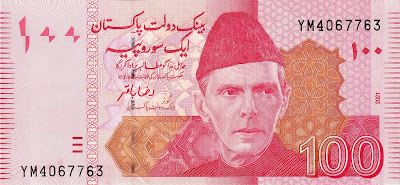
The aesthetics of Pakistani currency have undergone several transformations. Current designs include:


- The portrait of Muhammad Ali Jinnah, founder of Pakistan, on all banknotes.

- Cultural and architectural themes, such as the Badshahi Mosque, Islamia University, or landscapes of northern Pakistan.

- Bright colors and modern security features (metallic threads, watermarks, special inks).


Most common banknotes: 10, 20, 50, 100, 500, 1000, and 5000 PKR.


Coins: 1, 2, 5, and 10 rupees.


Current Value of the Pakistani Rupee


The Pakistani rupee has suffered significant devaluations in recent decades due to economic and political instability. As of today, the following are approximate:


- 1 USD ≈ 275-285 PKR

- 1 EUR ≈ 295-305 PKR


This value is constantly changing, so it's a good idea to check platforms like XE.com or the State Bank of Pakistan for updated figures.


Pakistan Rupee Interesting Facts


- The word "rupee" comes from the Sanskrit "rupyakam," meaning silver.

- Pakistan was one of the few Muslim countries that retained elements of Mughal architecture on its banknotes.

- In 2022, a redesign of some banknotes was proposed to better reflect the country's cultural diversity.

Is the Pakistani Rupee Interesting for Collectors?


Yes! Although it's relatively easy to obtain modern banknotes, there are some highly coveted older issues:


- Overprinted Indian banknotes from 1947-1948

- Special series or those with printing errors

- Commemorative coins issued by the State Bank of Pakistan


For collectors of banknotes from Islamic countries or regions in South Asia, this is a must-have for any album.


Tips for Finding Pakistani Rupees


- Look in specialized numismatic stores or on platforms such as eBay, Delcampe, or Numista.

- Prefer banknotes in UNC (uncirculated) quality if you're collecting them.

- Be sure to verify authenticity, especially with sellers outside of Pakistan.


The Pakistani rupee is not only a coin with economic value, but also a reflection of the history and culture of a young nation rich in traditions. Whether due to its design, its history, or its rarity in certain issues, it's worth including in any collection.

The Algerian Dinar: History, Facts, and Its Current Value


The Algerian dinar (DZD) is the official currency of Algeria, a North African country with a rich history marked by Berber, Arab, Ottoman, and French influences. Although it is not a common currency in international collections, it has characteristics that make it interesting for banknote and coin collectors around the world.


A Brief History of the Algerian Dinar


The dinar was introduced in 1964, two years after Algeria gained its independence from France. Before that, the Algerian franc, a local version of the French franc, was used.


- Symbol: د.ج (in Arabic), DZD (in international code)

- Division: 1 dinar = 100 centimes (although centimes are rarely used today)


Since its creation, the dinar has undergone several phases of redesign and monetary reforms. Banknotes and coins reflect scenes from Algeria's history, culture, and architecture. Banknotes and Coins: Aesthetics and Themes


Algeria has issued banknotes with striking and colorful designs, highlighting:


- Iconic sites: such as the Ketchaoua Mosque or the Sahara Desert.

- Historical figures: revolutionary leaders and symbols of independence.

- Cultural themes: agriculture, industry, science, and Islamic tradition.


Regarding coins, they range from 1 dinar to 100 dinars, with several design changes in recent decades.


Current Value of the Algerian Dinar


The Algerian dinar is not a strong currency on the international market. At the time of writing:


- 1 USD ≈ 135-140 DZD

- 1 EUR ≈ 145-150 DZD


(This value is subject to change; it is recommended to consult up-to-date sources such as XE.com or official banks.)


Due to exchange restrictions and internal economic policies, the dinar has a higher value on the local black market than on the official market, something important to consider if you are thinking of buying or selling pieces.


Is the Algerian Dinar Interesting for Collectors?


Yes, and for several reasons:


- It is a currency from a country with a complex and rich history.

- It has unique designs that are lesser-known in the collecting world.

- Some older issues are difficult to obtain, especially those from the 1960s and 1970s.


Also, if you enjoy collecting coins with Arabic characters or Islamic themes, the Algerian dinar is an excellent addition.


Tips for Collecting Algerian Dinars


- Look for uncirculated (UNC) banknotes to ensure good preservation.

- Investigate authenticity, as some pieces may be counterfeit or replicas.

- Sites like eBay, Numista, or specialized forums are good starting points for finding coins.


sábado

FOLLOW ON INSTAGRAM


We cordially invite you to follow us on Instagram @rob_collectibles as well as visit our website, which I will leave the link below

https://sites.google.com/view/robcollectibles/

miércoles

STARTING A STAMP COLLECTION: A COMPREHENSIVE GUIDE FOR BEGINNERS


Philately, the collection and study of postage stamps, is a rewarding hobby that offers a unique blend of history, art, and culture. Whether you're a beginner or looking to deepen your understanding, this guide covers everything you need to know about starting a stamp collection, including the types of stamps, their value, care, and essential tips.

Why Collect Stamps?

Stamp collecting is more than just a hobby; it’s a journey through time and space. Each stamp tells a story about the place and era it comes from, making it a fascinating way to learn about history, geography, and culture. It also offers the thrill of discovering rare and valuable items, and the satisfaction of building and organizing a collection.

Types of Stamps

Understanding the different types of stamps is fundamental to starting your collection:

1. Definitive Stamps: These are the most common stamps, issued for everyday postal use. They are typically small and printed in large quantities.

2. Commemorative Stamps: Issued to celebrate significant events, anniversaries, or notable individuals, these stamps are usually larger, more colorful, and printed in limited quantities.   

3. Special Stamps: These include stamps with unique features such as holograms, 3D designs, or those printed on unusual materials like silk or wood.

4. Airmail Stamps: Specifically used for airmail services, these stamps often feature aviation-related themes.

5. Postage Due Stamps: Issued to collect insufficient postage, they are an interesting niche within philately.

6. Revenue Stamps: Used to pay taxes or fees on documents, these are a different category but sometimes included in collections.

Determining Stamp Value

The value of a stamp is influenced by several factors:

1. Rarity: The scarcer a stamp, the higher its value. Limited print runs, errors, and older stamps tend to be more valuable   

2. Condition: Stamps in mint condition (unused, with original gum) are generally more valuable than used ones. However, some rare used stamps with unique cancellations can be highly prized.   

3. Demand: Popular themes or stamps from certain periods and regions can drive up value due to collector demand.

4. Age: Older stamps can be more valuable, particularly those in good condition and from the early days of stamp issuance.

5. Historical Significance: Stamps marking significant events or depicting famous figures can be more desirable.

Caring for Your Stamps

Proper care and handling of stamps are crucial to maintaining their condition and value:

1. Handling: Always use stamp tongs to handle stamps. Oils and dirt from your fingers can damage them.  

2. Storage: Store stamps in a cool, dry place. Humidity and temperature fluctuations can cause damage.  

3. Albums and Stockbooks: Use acid-free albums and stockbooks to organize and protect your stamps. Avoid adhesive mounts that can damage the stamps.

4. Protective Covers: Use glassine envelopes or plastic sleeves to protect individual stamps or sets.

5. Cleaning: Never attempt to clean stamps yourself. Seek professional advice if necessary, as improper cleaning can reduce a stamp's value.

Essential Tools for Stamp Collecting

Investing in the right tools can enhance your collecting experience:

1. Stamp Tongs: These are special tweezers designed to handle stamps gently.   

2. Magnifying Glass: Essential for examining details and identifying flaws or features.   

3. Perforation Gauge: Helps measure the perforations on stamp edges, a key aspect of identification.  

4. Catalogue: A stamp catalogue provides detailed information about stamps, including their value, rarity, and historical context.

5. Album or Stockbook: Essential for organizing and protecting your collection.

Tips for Beginners

Starting a stamp collection can be overwhelming, but these tips will help you navigate the process:

1. Start Small: Begin with a specific theme or country that interests you. Expanding your collection gradually helps you learn and manage it better.

2. Research: Educate yourself about stamps through books, online resources, and local philatelic societies. Knowledge enhances your appreciation and helps you make informed decisions.

3. Join a Community: Engaging with other collectors through clubs, online forums, or social media groups provides valuable insights and support.

4. Attend Shows and Auctions: Stamp shows and auctions are great places to see rare stamps, meet other collectors, and find new additions for your collection.

5. Be Patient: Building a valuable and meaningful collection takes time. Enjoy the journey and the learning process.

Stamp collecting is a fulfilling hobby that offers a unique combination of education and entertainment. By understanding the types of stamps, their value, and how to care for them, you can start building a collection that not only provides personal satisfaction but also has the potential to grow in value. Remember, the key to successful philately is patience, research, and a passion for the stories each stamp tells.

A PHILATELIC EXPLORATION OF THE YUGOSLAVIA STAMPS


Yugoslavia, a former federation of six republics in the Balkans, offers a rich tapestry of history and culture through its postage stamps. This article delves into the history of Yugoslavian stamps, their origins, and their value in the collectors' market today. 

Historical Overview

Yugoslavia's philatelic history is a reflection of its complex political landscape. The country, which existed in various forms from 1918 to 2003, underwent significant transformations that are mirrored in its stamps.

1. Kingdom of Serbs, Croats, and Slovenes (1918-1929)

   - The first stamps of the newly formed kingdom, established in 1918 after World War I, were overprints on existing stamps of Serbia, Croatia, and Slovenia. These overprints read "Država SHS" (State of Serbs, Croats, and Slovenes).

   - In 1921, the kingdom issued its first original stamps featuring King Peter I and later King Alexander I.

2. Kingdom of Yugoslavia (1929-1941)

   - The name changed to the Kingdom of Yugoslavia in 1929. Stamps from this period often depicted royal figures and national symbols, emphasizing the unity of the diverse ethnic groups within the kingdom.

3. World War II and Axis Occupation (1941-1945)

   - During World War II, Yugoslavia was occupied by Axis powers. Different regions issued their own stamps, including German and Italian occupations, as well as puppet states like the Independent State of Croatia.

4. Socialist Federal Republic of Yugoslavia (1945-1992)

   - After the war, Yugoslavia became a socialist republic under Josip Broz Tito. Stamps from this period reflect socialist themes, including workers, soldiers, and Tito himself.

   - The post-war issues also celebrated industrial achievements, national unity, and international solidarity, with many stamps featuring vibrant, propaganda-style artwork.

5. Breakup of Yugoslavia (1991-2003)

   - The breakup of Yugoslavia in the early 1990s led to the emergence of independent postal administrations in the successor states (Bosnia and Herzegovina, Croatia, Macedonia, Montenegro, Serbia, and Slovenia).

   - Stamps from this tumultuous period are varied, reflecting the rapid political changes and conflicts, especially in Bosnia and Herzegovina.

Notable Issues and Their Features

Yugoslavian stamps are known for their diverse themes and artistic quality. Some notable issues include:

- The 1921 Definitive Series: Featuring King Peter I, these were the first original stamps of the Kingdom of Serbs, Croats, and Slovenes.

- The 1934 King Alexander I Mourning Issue: Released after the assassination of King Alexander I, these stamps are black-bordered and highly collectible.

- Tito-era Propaganda Stamps: Stamps from the socialist era often featured strong political messages and celebrated Tito’s leadership, industrialization, and Yugoslav unity.

Collectors' Market Value

The value of Yugoslavian stamps in the collectors' market today varies significantly based on several factors:

1. Rarity: Stamps from the early years of the Kingdom of Serbs, Croats, and Slovenes, as well as those from the Axis occupation period, are particularly rare and valuable.

2. Condition: As with all philatelic items, mint condition stamps (those that have not been used and retain their original gum) are more valuable than used ones.

3. Historical Significance: Stamps marking significant historical events, such as the assassination of King Alexander I or the Tito era’s major industrial milestones, are highly sought after.

4. Errors and Varieties: Stamps with printing errors or unique varieties can fetch high prices. Overprints and misprints from the turbulent wartime and immediate post-war periods are especially prized.

Notable Yugoslavian Stamps

- 1918 Overprints: The first stamps of the new kingdom, these overprints on existing stamps from Serbia, Croatia, and Slovenia are rare and valuable.

- 1934 King Alexander I Mourning Issue: These stamps, issued after the king’s assassination, are significant for their historical context and scarcity.

- 1944 Partisan Issues: Stamps issued by the Partisan resistance during World War II are rare and highly collectible due to their association with the liberation struggle.

- Tito Propaganda Stamps (1950s-1970s): These colorful and ideologically driven stamps are popular for their design and historical significance.

The stamps of Yugoslavia provide a fascinating lens through which to view the region’s complex history. From the formation of the Kingdom of Serbs, Croats, and Slovenes to the socialist era under Tito and the eventual breakup of the country, each stamp tells a story of political change and cultural evolution. For collectors, Yugoslavian stamps offer a rich field of study and a chance to own a piece of history. Their value in the collectors' market continues to be strong, driven by their historical significance, rarity, and the captivating narratives they encapsulate. Whether you are a seasoned philatelist or a newcomer, the stamps of Yugoslavia represent a rewarding and intriguing aspect of philatelic heritage.

MAGYAR POSTA: THE STAMPS OF HUNGARY


Philately, the study and collection of postage stamps, opens a window to a country's history, culture, and art. Hungary, with its rich and diverse history, offers a fascinating array of stamps that reflect its journey from the Austro-Hungarian Empire to a modern European nation. This article delves into the history of Hungarian stamps, the role of Magyar Posta (Hungary's national postal service), the variety of stamp issues, and their value in the collectors' market.

Historical Overview

The history of Hungarian stamps dates back to the mid-19th century. The first stamps used in Hungary were those of the Austrian Empire, as Hungary was part of the Austro-Hungarian Empire. These stamps, issued in 1850, bore the portrait of Emperor Franz Joseph I. However, the need for distinctly Hungarian stamps grew as the national identity strengthened.

In 1867, following the Austro-Hungarian Compromise, Hungary gained more autonomy, and the first Hungarian stamps were issued. These featured the coat of arms of Hungary and were inscribed in Hungarian. Over the years, the designs evolved, reflecting significant historical events and cultural milestones.

Key Historical Milestones

1. 1867-1918: Austro-Hungarian Empire Period

   - The first Hungarian stamps were issued in 1867, featuring the Hungarian coat of arms.

   - Subsequent issues included portraits of Franz Joseph I and various symbolic designs.

2. 1918-1945: Interwar Period and World War II

   - The end of World War I saw the dissolution of the Austro-Hungarian Empire. Hungary issued stamps as an independent nation starting in 1918.

   - This period included stamps depicting national heroes, historical events, and significant political changes, including the brief existence of the Hungarian Soviet Republic in 1919.

3. 1945-1989: Socialist Era

   - Post-World War II, Hungary became a socialist state under Soviet influence. Stamps from this period often depicted communist themes, industrial achievements, and propaganda.

   - Notable issues included stamps celebrating space exploration and international solidarity.

4. 1989-Present: Modern Hungary

   - With the fall of communism in 1989, Hungary transitioned to a democratic republic. Modern stamps feature a mix of historical commemorations, cultural icons, and contemporary themes.

   - Magyar Posta has embraced technological advancements, issuing stamps with innovative designs and features.

Magyar Posta and Stamp Production

Magyar Posta, the Hungarian postal service, has been the primary issuer of stamps in Hungary. Established in 1867, it has a long tradition of producing high-quality stamps that are appreciated by collectors worldwide. Magyar Posta has consistently focused on artistic excellence and historical accuracy, making Hungarian stamps highly desirable.

Variety of Hungarian Stamps

The diversity of Hungarian stamps is vast, encompassing various themes and designs:

1. Definitive Stamps: These are everyday stamps used for regular mail. They often depict national symbols, such as the Hungarian coat of arms, and are issued in large quantities.

2. Commemorative Stamps: Issued to mark significant events, anniversaries, and notable individuals, these stamps are often more elaborate and printed in limited quantities.

3. Thematic Stamps: These stamps explore specific themes like nature, architecture, art, and sports, catering to niche interests of collectors.

4. **Special Issues**: These include stamps with unique features like holograms, 3D designs, or those printed on special materials.

Collectors' Market Value

The value of Hungarian stamps in the collectors' market varies widely based on rarity, condition, and historical significance. Here are some key factors influencing their value:

1. Rarity: Stamps from the early periods (1867-1918) are particularly valuable, especially those in mint condition. Stamps with printing errors or limited issues also command high prices.

2. Condition: Mint condition stamps, those that have not been used and retain their original gum, are more valuable than used ones. However, used stamps with rare cancellations can also be valuable.

3. Historical Significance: Stamps commemorating significant historical events or figures tend to be more sought after.

4. Special Features: Stamps with unique features or limited-edition releases can fetch high prices.

Notable Hungarian Stamps

- First Hungarian Issue (1867): Featuring the coat of arms, these stamps are highly prized by collectors.

- 1919 Hungarian Soviet Republic Stamps: Issued during a brief communist regime, these stamps are rare and historically significant.

- 1950s Space Exploration Series: Reflecting Hungary's participation in the space race, these stamps are popular among thematic collectors.

- Recent Innovations: Modern issues with innovative designs, such as holographic stamps, have also garnered attention.

Conclusion

The stamps of Hungary, issued by Magyar Posta, offer a captivating glimpse into the nation's history and cultural heritage. From the early issues of the Austro-Hungarian Empire to modern innovative designs, Hungarian stamps continue to be a cherished part of philately. Collectors worldwide appreciate their artistic quality, historical depth, and the stories they tell. Whether you're a seasoned collector or a newcomer to philately, Hungarian stamps provide a rich and rewarding journey through time.

sábado

THE EGYPT PIASTRA


The term "Piastra" has historical significance in Egypt, representing a unit of currency that was once used in the country. However, it's essential to note that the Piastra is no longer in circulation as a standalone currency. Instead, its legacy provides insight into Egypt's economic history and the evolution of its monetary system.

The origin of the Piastra dates back to the early 19th century when Egypt was under Ottoman rule. At that time, the Ottoman Empire introduced the Piastra as a silver coin used in various regions under its control, including Egypt. The word "Piastra" itself is derived from the Italian word "piastre," which originally referred to a silver coin used in Mediterranean trade.

During the late 19th and early 20th centuries, Egypt underwent significant political and economic changes, including British colonial rule and the establishment of the British protectorate. As part of these transformations, the Egyptian currency system evolved, with the Piastra being replaced by other denominations and currencies.

One of the most significant changes occurred in 1834 when Egypt adopted the Egyptian pound (EGP) as its official currency, replacing the Piastra and other local currencies. The Egyptian pound became the standard unit of currency in Egypt, reflecting the country's growing integration into the global economy and its desire for monetary stability.

Since then, the Egyptian pound has remained the primary currency used in Egypt for daily transactions, trade, and financial activities. The pound is subdivided into smaller units known as "piasters" or "qirsh," with 100 piasters equaling one Egyptian pound. This subdivision reflects the historical legacy of the Piastra, even though the coin itself is no longer in circulation.

In the current market, the Egyptian pound's value is determined by various factors, including domestic economic conditions, government policies, inflation rates, and external factors such as global economic trends and exchange rate movements. The Central Bank of Egypt plays a crucial role in managing the pound's exchange rate and implementing monetary policies to ensure price stability and support economic growth.

In recent years, Egypt has faced economic challenges, including inflationary pressures, currency devaluation, and external debt burdens. These challenges have impacted the value of the Egyptian pound, leading to fluctuations in exchange rates and affecting the purchasing power of Egyptian citizens.

To address these challenges, the Egyptian government has implemented economic reforms aimed at stabilizing the currency, attracting foreign investment, and promoting sustainable growth. These reforms include fiscal consolidation, subsidy reforms, and efforts to improve the business environment and enhance competitiveness.

Despite these efforts, the Egyptian pound remains subject to volatility and uncertainty in the global market, reflecting the broader challenges facing Egypt's economy and its ongoing transition towards a more diversified and resilient economic model.

While the Piastra holds historical significance in Egypt's economic past, its value in the current market is symbolic rather than practical. Today, the Egyptian pound serves as the country's primary currency, reflecting Egypt's economic evolution and aspirations for stability and prosperity in the 21st century.

THE ROOTS OF NIGERIA´S NAIRA CURRENCY


The Nigerian Naira, represented by the symbol ₦ and the ISO code NGN, serves as the official currency of Nigeria, Africa's most populous country and largest economy. The journey of the Naira reflects Nigeria's complex history, economic aspirations, and challenges. From its inception to its current position in the global market, the Naira remains a symbol of Nigeria's resilience and determination to build a prosperous future.

The roots of the Naira can be traced back to Nigeria's colonial past. Prior to independence in 1960, Nigeria used the British West African pound as its currency, which was pegged to the British pound sterling. However, with the attainment of independence, Nigeria sought to establish its own national currency to symbolize its sovereignty and independence.

In 1973, the Central Bank of Nigeria introduced the Naira and Kobo as the official currency units, replacing the pound. The word "Naira" is derived from the combination of "Nigeria" and "aira," the monetary unit of Nigeria's northern region before independence. The introduction of the Naira marked a significant milestone in Nigeria's economic history, representing a break from its colonial past and the beginning of a new era of economic development.

Initially, the Naira was pegged to a basket of foreign currencies, including the British pound and the US dollar, to maintain stability and facilitate international trade. However, over time, the Naira's value has been subject to fluctuations influenced by various factors such as oil prices, government policies, inflation, and external shocks.

Nigeria's economy is heavily dependent on oil exports, with crude oil accounting for a significant portion of government revenue and foreign exchange earnings. As a result, fluctuations in global oil prices have a direct impact on the Naira's value, as seen during periods of oil price volatility.

In recent years, Nigeria has faced economic challenges such as low oil prices, recession, inflation, and foreign exchange shortages. These challenges have put pressure on the Naira, leading to depreciation against major foreign currencies and affecting the purchasing power of Nigerians.

To address these challenges, the Central Bank of Nigeria has implemented various monetary policy measures to stabilize the Naira and manage inflation. These measures include foreign exchange interventions, interest rate adjustments, and capital controls. Additionally, efforts to diversify the economy away from oil dependence and promote non-oil sectors such as agriculture, manufacturing, and services aim to reduce the vulnerability of the Naira to external shocks.

In the current market, the value of the Naira fluctuates against major currencies such as the US dollar, euro, and British pound. Exchange rate movements impact Nigeria's imports, exports, inflation rates, and overall economic stability. As such, monitoring the Naira's performance and implementing sound economic policies remain critical for Nigeria's economic development and prosperity.

The Nigerian Naira's origin reflects Nigeria's journey towards independence and economic self-reliance. Its value in today's market is influenced by a myriad of factors, highlighting the complexities of Nigeria's economy and the challenges it faces. Despite these challenges, the Naira remains a symbol of Nigeria's resilience and determination to build a strong and vibrant economy for the benefit of its people.

THE INDIAN RUPEE


The Indian Rupee, denoted by the symbol ₹ and the ISO code INR, stands as a symbol of India's rich cultural heritage, economic prowess, and resilience. With a history spanning centuries, the Indian Rupee has evolved from its ancient origins to become one of the most widely recognized currencies in the world. Today, it plays a pivotal role in India's economy and holds significance in the global financial landscape.

The roots of the Indian Rupee can be traced back to the ancient civilizations of the Indian subcontinent. Historically, various forms of currency were used in India, including cowrie shells, metal coins, and silver rupees. The term "rupee" is believed to have originated from the Sanskrit word "rupya," meaning "wrought silver" or "coin." Silver rupees were widely circulated during the Mughal Empire, which ruled over the Indian subcontinent from the 16th to the 19th century.

During British colonial rule, the Indian Rupee underwent significant changes. In 1835, the British East India Company introduced the "Coinage Act," which standardized the Indian Rupee as the official currency of British India. Silver rupees continued to be minted, but with the British monarch's effigy replacing traditional motifs. The Indian Rupee became a vital instrument of colonial exploitation, facilitating trade and economic control.

Following India's independence in 1947, efforts were made to establish the Indian Rupee as a symbol of national sovereignty and economic self-reliance. In 1950, the Indian government introduced the "Indian Coinage Act," which replaced British currency with a new series of coins and banknotes featuring Indian symbols and leaders. The Reserve Bank of India (RBI) was tasked with regulating the currency and monetary policy to ensure economic stability and growth.

In the decades that followed, the Indian Rupee faced various challenges, including inflation, devaluation, and economic reforms. In 1991, India embarked on a path of liberalization and globalization, dismantling many of the socialist-era policies and opening up its economy to foreign investment and trade. These reforms had a profound impact on the Indian Rupee, leading to greater exchange rate flexibility and integration into global financial markets.

Today, the Indian Rupee is one of the most traded currencies in the world, with a significant presence in international foreign exchange markets. Its value is influenced by a myriad of factors, including domestic economic indicators, geopolitical developments, and global market trends. The Reserve Bank of India plays a crucial role in managing the Rupee's exchange rate through monetary policy tools such as interest rate adjustments and foreign exchange interventions.

In recent years, the Indian Rupee has faced challenges such as inflationary pressures, trade imbalances, and geopolitical tensions. Fluctuations in oil prices, a key import for India, also impact the Rupee's value, given its significant energy needs. Despite these challenges, India's robust economic growth, large consumer market, and skilled workforce continue to attract foreign investment, bolstering confidence in the Indian Rupee.

The Indian Rupee's origin reflects India's rich cultural heritage and historical legacy. Its value in today's market is shaped by a complex interplay of domestic and global factors, highlighting India's importance in the global economy. As India continues to navigate the challenges of the 21st century, the Indian Rupee remains a symbol of resilience, progress, and economic vitality.

THE MALAWI KWACHA


The Malawi Kwacha, denoted by the symbol MWK and the ISO code MWK, serves as the official currency of the Republic of Malawi. Its journey through history reflects the nation's evolution, struggles, and aspirations. From its humble beginnings to its current position in the global market, the Malawi Kwacha embodies the resilience and determination of the Malawian people.

The roots of the Malawi Kwacha can be traced back to the pre-colonial era when Malawi, then known as Nyasaland, was under British colonial rule. During this time, various currencies, including the British pound sterling and the South African rand, were in circulation. However, the need for a national currency became apparent as Malawi moved towards independence.

In 1971, shortly after gaining independence from Britain, Malawi introduced its own currency, the Malawi Kwacha, to replace the East African shilling. The word "Kwacha" translates to "dawn" in the Chewa language, symbolizing the birth of a new era for the nation. The Kwacha was initially pegged to the British pound at a fixed exchange rate, reflecting Malawi's close ties to its former colonial ruler.

Over the years, the value of the Malawi Kwacha has been subject to fluctuations influenced by various internal and external factors. Economic policies, political stability, and global market trends all play a role in shaping the Kwacha's value against other currencies. Additionally, Malawi's dependence on agricultural exports, particularly tobacco, exposes the Kwacha to fluctuations in commodity prices.

Despite efforts to maintain stability, the Malawi Kwacha has experienced periods of volatility, with sharp devaluations impacting the purchasing power of Malawians. Economic challenges, such as high inflation, limited foreign exchange reserves, and reliance on donor aid, have contributed to the Kwacha's vulnerability in the global market.

In recent years, the Malawian government and the Reserve Bank of Malawi have implemented various measures to stabilize the Kwacha and promote economic growth. These include fiscal reforms, monetary policy adjustments, and efforts to diversify the economy away from reliance on agriculture. Additionally, initiatives to improve governance, transparency, and financial inclusion aim to build confidence in the Malawian economy and the Kwacha.

In the current market, the value of the Malawi Kwacha fluctuates against major currencies such as the US dollar, euro, and South African rand. Exchange rate movements impact Malawians' livelihoods, affecting the cost of imported goods, inflation rates, and overall economic stability. As such, monitoring the Kwacha's performance and implementing prudent financial management practices remain critical priorities for Malawi's economic development.

The Malawi Kwacha's origin reflects the nation's journey towards independence and self-determination. Its value in today's market is shaped by a complex interplay of domestic and global factors, highlighting the importance of sound economic policies and prudent financial management. Despite challenges, the Malawi Kwacha remains a symbol of national pride and resilience, embodying the aspirations of the Malawian people for a prosperous future.

THE ORIGINS OF RUSSIAN RUBLES


The Russian ruble, denoted by the symbol ₽ and the ISO code RUB, is the official currency of Russia. Its origins date back to the late 14th century, making it one of the oldest currencies in the world. The history of the ruble is deeply intertwined with Russia's economic, political, and cultural evolution, reflecting the country's tumultuous journey through the centuries.

The term "ruble" is believed to have originated from the Russian word "rubit," meaning "to chop" or "to cut." In medieval times, a ruble was a measure of weight for silver bullion, rather than a coin. The first Russian ruble coins were introduced by Ivan the Terrible in the 16th century during his reign. These early coins were made of silver and gradually became the standard currency in Russia.

Throughout its history, the value of the ruble has fluctuated significantly, influenced by various factors such as wars, political instability, economic reforms, and shifts in global markets. One of the most significant milestones in the ruble's history was the Bolshevik Revolution of 1917, which led to the establishment of the Soviet Union and the introduction of a new currency, the Soviet ruble. Under Soviet rule, the ruble was subject to extensive government control and manipulation, with its value often artificially fixed to serve political objectives.

Following the dissolution of the Soviet Union in 1991, Russia underwent a period of economic transition and reform known as "shock therapy." This transition involved the liberalization of prices, privatization of state-owned enterprises, and the introduction of market-oriented policies. As part of these reforms, the Russian ruble was redenominated, with new banknotes and coins introduced to replace the Soviet ruble.

In the years that followed, the Russian economy experienced both rapid growth and severe setbacks, including financial crises in 1998 and 2014. These crises had a significant impact on the value of the ruble, leading to sharp devaluations and fluctuations in exchange rates. Factors such as geopolitical tensions, fluctuations in oil prices (a crucial export for Russia), and economic sanctions imposed by Western countries have also influenced the ruble's value in the international market.

In recent years, the Russian government has taken measures to stabilize the ruble and bolster confidence in the currency. The Central Bank of Russia plays a crucial role in managing the ruble's exchange rate through monetary policy tools such as interest rate adjustments and foreign exchange interventions. Additionally, efforts to diversify the Russian economy away from reliance on oil and gas exports aim to reduce the ruble's vulnerability to commodity price fluctuations.

Despite its challenges, the Russian ruble remains an integral part of Russia's economy and financial system. It is widely used for domestic transactions, and its value is closely monitored by businesses, investors, and policymakers alike. In the global market, the ruble is traded alongside other major currencies such as the US dollar, euro, and Chinese yuan, reflecting Russia's position as a significant player in the international economy.

In conclusion, the Russian ruble's origins trace back centuries, reflecting the country's rich history and cultural heritage. Its value in today's market is shaped by a complex interplay of domestic and international factors, making it a subject of continual scrutiny and analysis in the global financial landscape.

martes

REDISCOVERING NOSTALGIA: THE ENDURING ALLURE OF VINTAGE TOY COLLECTING


In the digital environment that technology surrounds us today, there's a charming nostalgia that accompanies the sight of a vintage toy. The essence of vintage toy collecting transcends mere material possessions; it's a journey back in time, a tangible connection to cherished memories of childhood. For enthusiasts, these toys aren't just playthings; they're relics that encapsulate the innocence, joy, and simplicity of days gone by.

At the heart of vintage toy collecting lies a profound appreciation for craftsmanship and history. Each toy represents a bygone era, crafted with care and attention to detail that often surpasses modern mass-produced counterparts. Whether it's a meticulously painted tin robot from the 1950s or a hand-carved wooden doll from the early 20th century, vintage toys carry with them the stories of their makers and the generations of children who once cherished them.

The value of vintage toy collecting extends beyond monetary worth; it's deeply personal for many collectors. These toys evoke memories of carefree days spent in imaginative play, forming bonds with siblings and friends, and exploring the boundless realms of creativity. For some, collecting vintage toys is a way to recapture a sense of innocence and wonder in an increasingly fast-paced and digital world.

Moreover, vintage toy collecting serves as a form of cultural preservation. Each toy is a time capsule, offering insights into the societal norms, popular trends, and technological advancements of its era. From iconic characters that have shaped popular culture to toys that reflect the prevailing interests and values of their time, vintage toy collections provide a unique lens through which to examine history.

In the current market, vintage toy collecting occupies a distinctive niche, characterized by passionate enthusiasts and a vibrant community. While mainstream trends may come and go, the appeal of vintage toys remains enduring. In fact, the market for vintage toys has experienced a resurgence in recent years, driven by nostalgia-seeking adults eager to reconnect with their childhoods.

One of the factors driving the popularity of vintage toy collecting is the rise of online marketplaces and auction sites, which have made it easier than ever to buy, sell, and connect with fellow collectors worldwide. Social media platforms also play a significant role, allowing enthusiasts to share their collections, trade tips, and engage in discussions about their favorite toys.

Despite the digital age, there's an irreplaceable satisfaction in the tactile experience of hunting for vintage toys in flea markets, antique shops, and garage sales. The thrill of uncovering a rare find or stumbling upon a beloved childhood treasure is unmatched, fostering a sense of camaraderie among collectors who share in the excitement of the hunt.

Moreover, the scarcity of certain vintage toys adds to their allure, driving up demand and prices in the collector's market. While some may view vintage toy collecting as a hobby reserved for the affluent, there's a diverse range of enthusiasts from all walks of life who find joy in preserving and appreciating these nostalgic artifacts.

In essence, vintage toy collecting is more than just a hobby; it's a testament to the enduring power of nostalgia and the timeless appeal of childhood innocence. As long as there are individuals who cherish the memories of their youth and seek to preserve the treasures of yesteryear, the allure of vintage toys will continue to captivate hearts and minds for generations to come.

TRIBUTE TO AKIRA TORIYAMA (1955-2024)


With this Post we want to pay tribute to one of the greatest exponents of Japanese Anime, Akira Toriyama, his legacy and essence will be eternal as well as his masterful Dragon Ball saga, we all grew up and lived the experiences of Goku and his friends, and we still maintain those memories translated into collectible objects.


Dedicated to Akira Toriyama

1955-2024


この投稿で、私たちは日本アニメの偉大な推進者の一人である鳥山明に敬意を表したいと思います。彼の遺産と本質は、彼の傑作ドラゴンボール物語と同様に永遠であり、私たちは皆、悟空とその友達の経験を生きて成長しました。そして私たちはそれらの思い出を収集可能なオブジェクトに変えて今でも維持しています。


鳥山明に捧げます

1955-2024


The Pakistani Rupee: Origin, Design, and Value Today

  The Pakistani rupee (PKR) is the official currency of Pakistan, a country with a history marked by its independence from British rule and ...